.png)
More Walls, Less Time.
The WLTR masonry robot is transforming the construction industry, bringing innovation to both industrial and residential projects. It provides unmatched support for building long, precise, and perfectly aligned walls.


Meet the unstoppable mason built for the long haul — delivering 10 square meters of flawless masonry per hour, reaching heights of up to 3.50 meters. WLTR doesn’t just work; he outperforms, replacing the output of a 5-person team with precision and efficiency.

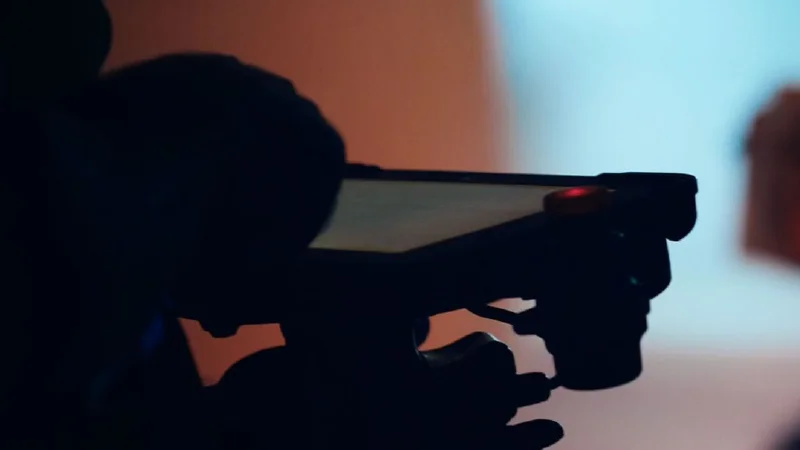
A true perfectionist, WLTR delivers uncompromising precision. With tablet-controlled commands, it lays robot-compatible bricks flawlessly, following a virtual wall model to the letter. Precision and quality, every time.

The tireless workaholic built for non-stop performance. Day or night, rain or shine, he never takes a break, never slows down, and never calls in sick. With WLTR, the job gets done, every time.

A true powerhouse of efficiency, he gets the job done with minimal needs—just electricity and water. Designed for maximum output, WLTR boosts productivity while cutting costs.


Construction robotics brings numerous improvements to the construction industry, significantly impacting efficiency, safety, and quality of work.
Their deployment on construction sites enhances the industry's image and increases the attractiveness of construction jobs, partially addressing the current skilled labour shortage.
While the masonry robot builds a long, straight wall, construction workers can focus on other aspects of the project.

The masonry robot works with high precision and consistency. Each brick is placed with machine accuracy according to project specifications, eliminating human error and ensuring consistent quality of work.

WLTR significantly increases the pace of work compared to the manual process. The masonry robot works continuously without breaks at a constant speed, leading to higher productivity on the construction site.

Automated bricklaying reduces manual work and thus lowers labour costs. WLTR is effective even in the harshest weather conditions, leading to long-term savings.

Masonry robots minimise construction site risks and eliminate the dangers of working at heights, drastically reducing workplace accidents. With advanced safety features, they take human error out of the equation.

WLTR works beyond the limits of human labour, powering through multiple shifts without pause. It accelerates construction projects with unmatched endurance and efficiency.

With precise control and planning, WLTR maximizes material efficiency. Using a 125 mm modular system, it places bricks with pinpoint accuracy, eliminating cuts, reducing waste, and saving costs—all while building smarter.

The masonry robot is equipped with sensors and cameras that allow detailed documentation and monitoring of work status. This provides valuable data for monitoring project progress and optimising work processes.
WLTR works cleanly, precisely, efficiently, and quickly.
A cross-line laser is used to align the masonry robot. WLTR uses the laser system and its sensors to monitor the horizontal alignment of the wall and other parameters specified by the operator.

After completing the surveying, WLTR picks up two bricks at a time from the front, facilitated by specially developed grooves on the brick faces. Using its sensors, the masonry robot detects damaged bricks and alerts the operator. If the bricks on the pallet are misaligned and cannot be picked up simultaneously, it picks them up individually.

In the next step, the masonry robot wets the surface of the bricks and applies Porotherm Dryfix foam in two strips according to the manufacturer’s instructions using the nozzles at the front of the machine. The container for two adhesive foam cartridges is located inside the robot in a moderately heated space.
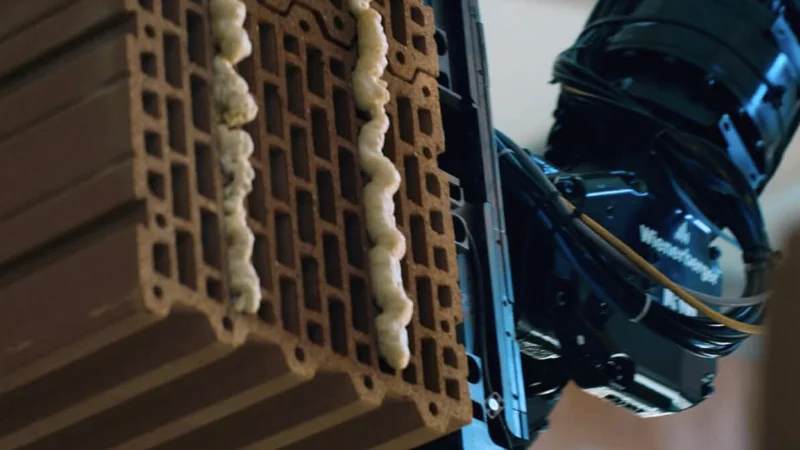
An alternative for structures subject to higher static loads is the use of Porotherm Profi thin-bed mortar. This is automatically applied by dipping into a container with prepared mortar.
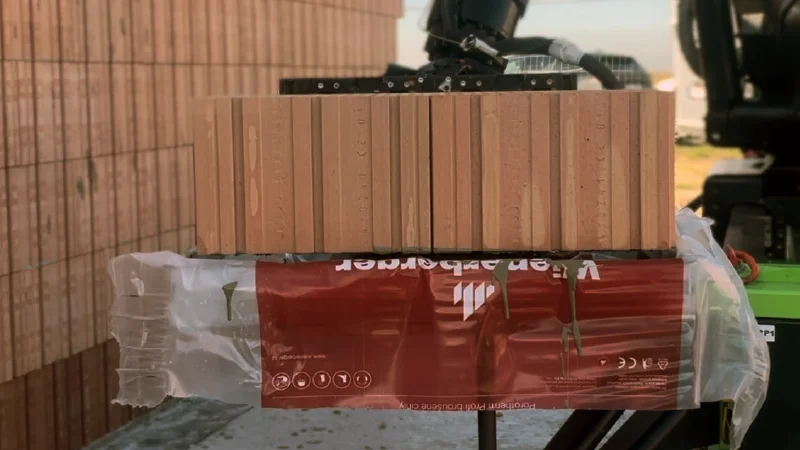
When WLTR runs out of bricks, the supporting worker removes the empty pallet and places a new one at the location determined by the robot’s laser. Alternatively, WLTR can start grabbing bricks from a second pallet.

When WLTR reaches its maximum range, it moves independently along the completed wall using its integrated hydraulic system. For repositioning within a floor, an electric pallet truck is used to transport both the robot and the brick pallets. WLTR fits through standard 80 cm door openings during the carcassing phase and can be moved between floors by crane using dedicated handling points.

The masonry robot communicates with the operator via tablet and requires one supporting worker to ensure the supply of new brick pallets and carry out tasks such as cutting bricks, fitting wall anchoring clips or preparing wall openings. WLTR can inform the worker in advance about necessary adjustments, while these tasks remain under human responsibility.